
For facility managers comparing commercial energy incentives in Ontario, the hardest part of an energy retrofit is often not identifying waste, it is getting a well-scoped project approved without adding risk, downtime or administrative work.
The Save on Energy BizEnergySaver Program is designed to remove much of that friction for eligible facilities in Toronto and Ottawa. It provides a no-cost assessment, direct installation and an instant discount on qualifying energy-efficiency measures. Depending on the measure cost and the program’s per-unit incentive, the discount can cover up to 100% of the eligible measure cost, including installation. As an approved BizEnergySaver contractor, Leader Lighting and Energy Services (LLES) handles the process end to end: we confirm eligibility, arrange the assessment, prepare the paperwork and install the approved measures.
That does not mean every green upgrade is free, every building in Canada qualifies or every energy-saving technology is covered. The strongest business case starts with a precise understanding of what the program does—and what it does not do.
This guide gives owners, facility managers, operations leaders and sustainability teams a practical path from eligibility check to completed installation. It is based on the BizEnergySaver Program Requirements, Version 9.1, dated July 15, 2026, and was last verified on August 4, 2026.
The 60-second summary
- BizEnergySaver is an Ontario IESO/Save on Energy program for eligible non-residential and multi-family facilities in Toronto and defined areas of Ottawa.
- LLES is an approved BizEnergySaver contractor. One call to LLES covers the eligibility screen, the assessment booking, the program paperwork and the installation.
- Toronto facilities are eligible if their postal code begins with M. Ottawa eligibility is based on a specific list of the first three postal-code characters.
- The offer is an instant discount, not a rebate cheque received months later.
- Qualifying measures include interior LED lighting paired with controls, VFDs for pumps and fans, and carbon-monoxide controls for parking-garage exhaust fans.
- We offer this assessment for free. The incentive cannot exceed 100% of the eligible measure cost, and some project costs may remain.
- Agreements and work orders are due within up to 90 days of the assessment. Eligible measures must be installed and accepted by August 31, 2027 under the current rules.
- LLES serves organizations across Canada. If a site is outside the BizEnergySaver territory—or an upgrade falls outside its measure list—LLES can still assess, design and implement a broader energy project and screen for other incentives that may apply.
Up to 100%
of the eligible measure cost can be covered, including installation
90 days
after the assessment to sign the Participant Agreement and Work Order
Aug 31, 2027
deadline to install and accept eligible measures under Version 9.1
In this guide
- Build a business case your capital committee can approve
- A facility manager’s pre-assessment checklist
- The portfolio strategy: use the incentive without letting it limit the plan
- Common mistakes that delay or weaken a project
- Frequently asked questions
- Next step: turn eligibility into an executable facility plan
What is the BizEnergySaver Program?
BizEnergySaver is a direct-install, instant-discount program offered by the Independent Electricity System Operator (IESO) through Save on Energy. It is delivered with local utilities to reduce electricity use and peak demand in targeted parts of Ontario.
The program is intended for industrial, commercial, institutional and multi-family buildings. It focuses on proven upgrades that can be assessed and priced consistently:
- Interior LED lighting and lighting controls
- High- and low-bay LED lighting with occupancy controls
- Variable frequency drives (VFDs) for eligible pumps and fans
- Carbon-monoxide sensors and controls for parking-garage exhaust fans
The financial mechanism matters. With a traditional rebate, the customer often pays the full project cost, completes the work and waits for reimbursement. BizEnergySaver applies the approved incentive as an instant discount against the work-order cost. The participant pays the remaining contribution, if any, and LLES shows that net figure on the work order before anything is installed.
That makes it different from conventional business energy rebates in Toronto and Ottawa, even though “rebate” is often used as shorthand when organizations research available funding.
The current official BizEnergySaver overview also notes that most eligible VFD upgrades may be fully covered, although ancillary work—such as added wiring, a bypass or certain TSSA-related costs—can still create a participant contribution.
BizEnergySaver Program eligibility in Toronto and Ottawa
A facility must pass three tests: participant, location and project eligibility. LLES runs all three checks for you before any site visit is scheduled, so you know where you stand within a day or two of getting in touch.
Test 1
Participant eligibility
The participant must:
- Be a non-residential electricity distribution customer
- Own the facility or have the legal authority and owner permission required to install the equipment
- Accept the Participant Agreement
- Sign and return the Participant Agreement and Work Order within up to 90 days of the assessment
Owners, operators and tenants may participate when they have the necessary authority. Eligible property types include commercial, industrial, institutional and multi-family buildings; individual residential customers do not qualify.
Test 2
Toronto and Ottawa location eligibility
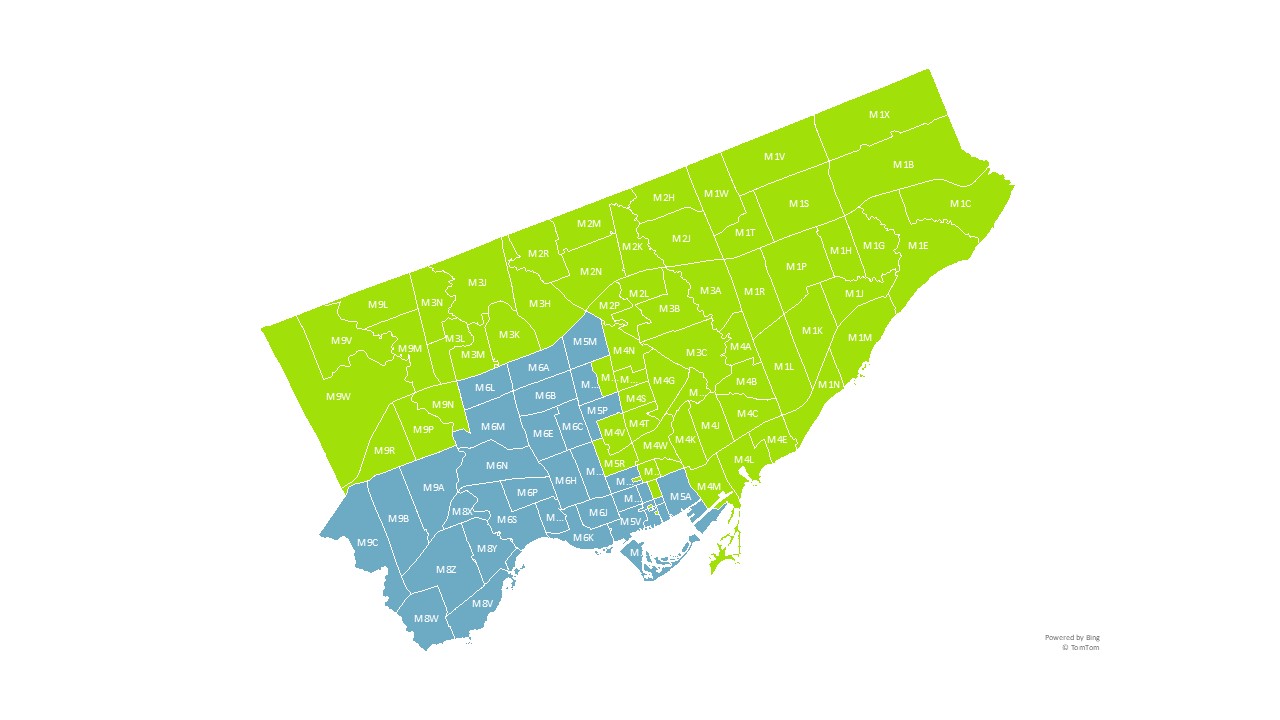
Toronto: Under Version 9.1 of the Program Requirements, all Toronto postal codes beginning with “M” are eligible.
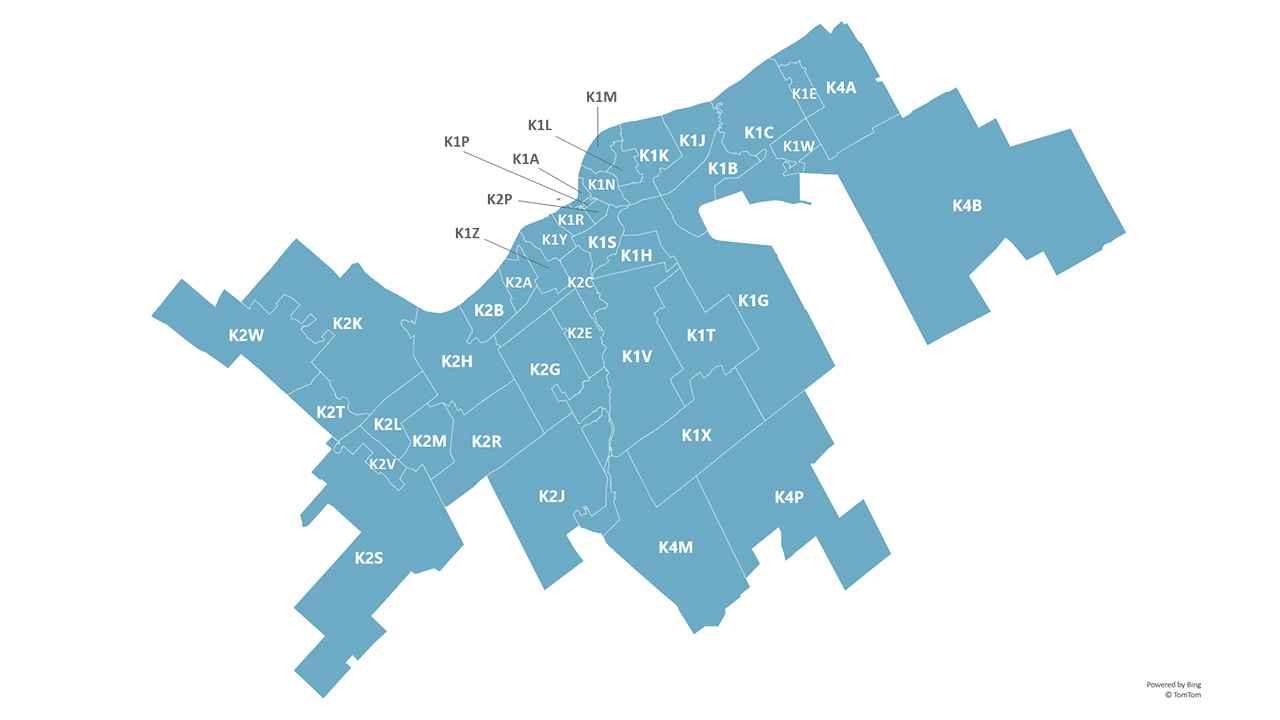
Ottawa: The first three characters of the facility postal code must be one of the following:
Eligible Ottawa forward-sortation areas
K1A, K1B, K1C, K1E, K1G, K1H, K1J, K1K, K1L, K1M, K1N, K1P, K1R, K1S, K1T, K1V, K1W, K1X, K1Y, K1Z, K2A, K2B, K2C, K2E, K2G, K2H, K2J, K2K, K2L, K2M, K2P, K2R, K2S, K2T, K2V, K2W, K4A, K4B, K4M, K4P
Postal-code eligibility is an excellent first screen, but it is not final approval. Utility account type, existing equipment, operating hours, technical conditions and the proposed measure still need to be confirmed during assessment. If you are unsure whether an address qualifies, send the postal code to LLES and we will confirm it against the current program list.
Test 3
Project eligibility
At least one proposed upgrade must appear on the current eligible-measures list and meet its technical requirements. The project must follow the approved Work Order, be completed by a program-qualified installer such as LLES and satisfy Ontario electrical-safety requirements.
The same measure cannot also receive another taxpayer-, ratepayer-, manufacturer- or supply-chain-funded financial incentive for the same electricity savings. In other words, do not assume incentives can be stacked.
Is your facility a strong candidate? Use this scorecard
The postal code tells you whether to investigate. The equipment profile tells you whether the opportunity may be worth prioritizing.
Facility scorecard
Give your facility one point for each “yes”:
- Do interior areas still use fluorescent, CFL, HID or other legacy lighting?
- Do warehouses, garages, stairwells or back-of-house spaces operate for long hours?
- Do lights remain on when areas are unoccupied?
- Do pumps or fans run at constant speed despite variable demand?
- Does a parking-garage exhaust system run continuously without carbon-monoxide-based control?
- Is aging equipment creating maintenance calls, lift rentals or hard-to-source lamp and ballast replacements?
- Do you manage several facilities and want to standardize equipment, controls and reporting?
0–2 points
There may still be an opportunity, but a targeted assessment is more appropriate than assuming a large retrofit.
3–5 points
The facility is a good candidate for a structured lighting and mechanical review.
6–7 points
Put the assessment on the near-term capital plan. The combination of operating hours, controls and maintenance exposure can make delay expensive.
This score is a planning tool, not a program-eligibility determination. Share your score with LLES and we will tell you whether a BizEnergySaver assessment is the right next step.
What upgrades qualify for BizEnergySaver incentives?
Incentives are calculated per eligible unit and depend on the existing equipment, proposed replacement, operating profile and technical conditions. The assessment—not a generic price list—determines what the project can receive.
The following examples show the scale of selected measures in the July 15, 2026 requirements. Energy and demand savings are program estimates per unit, not guaranteed savings for every facility.
| Selected eligible measure | Required baseline/operation | Deemed annual savings | Deemed peak-demand savings | Maximum listed instant discount* |
|---|---|---|---|---|
| LED high/low-bay fixture + sensor replacing 400 W HID | Existing fixture operates 8,760 hours/year | 3,466 kWh | 0.514 kW | $454 |
| LED high/low-bay fixture + sensor replacing 1,000 W HID | Existing fixture operates 8,760 hours/year | 8,648 kWh | 1.283 kW | $552 |
| VFD on a 20 HP single-pump motor | No existing VFD; operates 8,760 hours/year | 41,313 kWh | 4.587 kW | $5,720 |
| VFD on a 20 HP fan motor | No existing VFD; operates 8,760 hours/year | 59,600 kWh | 6.617 kW | $7,500 |
| CO sensor controlling parking-garage fan(s) | No CO control; fan(s) operate 8,760 hours/year | 6,409 kWh | 0.732 kW | $1,755 |
*Listed amounts exclude HST and cannot exceed 100% of the eligible measure cost.
The program also includes qualifying measures for non-continuous operations. For example, certain VFD measures may qualify where equipment operates for at least 2,000 hours per year and during the June-to-August cooling season. That is valuable for facilities whose equipment does not run around the clock—but the operating criteria must be documented, which LLES does as part of the assessment package.
Lighting details facility managers should not miss
For teams searching for commercial LED lighting rebates, the current rules are more specific than “replace old lights with LEDs”:
- Installed lighting systems must include eligible sensors; a lighting measure without sensors must be paired with a qualifying sensor measure at the same time.
- Sensors must be commercial grade and use eligible technologies such as passive infrared, ultrasonic or a combination.
- Products must be listed by DesignLights Consortium or ENERGY STAR, as applicable.
- Replacing existing LED equipment with new LED equipment is not eligible.
- Exterior-lighting replacement is not eligible under the current BizEnergySaver measure list.
LLES specifies DLC-listed fixtures and compliant sensor packages by default, so the lighting scope we submit already meets these rules. LLES can still plan and deliver exterior-lighting or LED-to-LED modernization projects; they simply should not be presented as BizEnergySaver-funded measures unless the program rules change.
What is not covered by BizEnergySaver?
Clear exclusions protect a capital plan from being built around funding that does not exist.
| Upgrade or cost | BizEnergySaver status under current rules | Practical next step |
|---|---|---|
| Existing LED replaced with new LED | Not eligible as a BizEnergySaver lighting measure | Evaluate lifecycle, controls, light quality and other funding separately |
| Exterior lighting | Not eligible under the current measure list | Scope it as a separate project or screen for another program |
| HVAC equipment replacement | Not a listed BizEnergySaver measure; eligible VFDs and controls may apply to certain pumps/fans | Separate the mechanical scope into eligible and non-eligible components |
| Refrigeration equipment upgrades | Not broadly covered by BizEnergySaver | Review other utility programs and the standalone business case |
| EV charging infrastructure | Not a BizEnergySaver measure | Treat as a separate infrastructure and electrification project |
| HST and certain ancillary work | May remain payable by the participant | Request a line-by-line work order and exclusions list |
| A measure receiving another incentive for the same savings | Not eligible for duplicate funding | Compare programs before committing the measure |
This distinction is especially important for multi-measure projects. A facility can have an excellent overall decarbonization plan even if only part of it qualifies for BizEnergySaver. Because LLES delivers lighting, controls, HVAC optimization, refrigeration and EV charging work across Canada, we can split a project into its funded and unfunded parts and deliver both under one contract.
How the BizEnergySaver process works
Step 1
LLES screens the site and decision rights
Confirm the postal code, electricity account type, building use and who can authorize permanent equipment installation. Tenants should secure owner permission early; multi-site organizations should identify a decision-maker and site contact for each property. This is the point to contact LLES—we complete the screen with you and, if the site qualifies, book the assessment.
Step 2
Contact Leader Lighting to complete the no-cost assessment
A program representative reviews existing equipment, quantities, operating hours and site conditions. Lighting and mechanical assessments are separate, although they may be scheduled together. LLES coordinates the visit and attends it, so the equipment counts, operating hours and site constraints that drive the incentive are captured correctly the first time.
Prepare the site so the assessor can access electrical rooms, mechanical rooms, rooftops where relevant, garages and representative occupied areas. Escort requirements, security rules and shutdown restrictions should be disclosed in advance.
Step 3
Review the Assessment Summary
The report will identify:
- Existing equipment and quantities
- Recommended eligible measures
- Estimated electricity and peak-demand savings
- Measure cost
- Instant discount
- Participant contribution
For a facility manager, this is the approval package. Check more than payback: verify illumination levels, control sequences, compatibility, installation phasing, warranty, disposal, commissioning and operational constraints. LLES walks through the summary with you line by line and flags anything that should be adjusted before you sign.
Step 4
Approve only the measures that make sense
The participant decides which recommended measures to accept. Under the current requirements, the signed Participant Agreement and Work Order must be submitted within up to 90 days of the assessment.
Do not authorize work outside the approved process or assume an unlisted substitution will receive the same incentive. The signed Work Order controls the project scope and economics. LLES prepares and submits the Participant Agreement and Work Order on your behalf and tracks the deadline.
Step 5
LLES coordinates installation
Only installers qualified for BizEnergySaver can complete program-funded measures. LLES is an approved contractor, so the same team that screened the site and prepared the paperwork carries out the installation. A good execution plan should address:
- Safety orientations, permits and site-specific procedures
- Lift access, ceiling access and occupied-area protection
- Production, tenant or public-facing schedules
- Temporary lighting or equipment downtime
- Controls setup and operator training
- Removal and responsible disposal of replaced lighting equipment
Step 6
Verify and close out
Confirm that quantities, products and control sequences match the approved scope. Collect warranties, as-built information, commissioning results and close-out documents. After installation, the participant signs the Acceptance of Installation section of the Work Order, which LLES prepares and submits with the close-out package.
Under Version 9.1, eligible measures must be installed and the acceptance submitted by August 31, 2027.
Step 7
Pay the net contribution
The instant discount is applied against eligible measure costs. The participant pays the remaining contribution, HST and any excluded work shown in the Work Order.
Build a business case your capital committee can approve
An incentive is helpful, but it should not be the entire justification. A high-quality retrofit proposal translates the engineering scope into financial, operational and risk outcomes. LLES provides this analysis with every BizEnergySaver proposal so the numbers are ready for your approval process.
Use this structure:
Net project cost
Eligible measure and installation cost
− approved instant discount
= participant contribution before HST and excluded work
Annual avoided variable electricity cost
Assessed annual kWh reduction
× the facility’s applicable incremental electricity rate
= estimated annual energy-cost reduction
Then add the value of:
- Peak-demand reduction, where the rate structure makes it applicable
- Avoided lamp, ballast and driver replacements
- Reduced lift rentals and contractor callouts
- Better visibility, safety and occupant experience
- Lower failure risk from aging equipment
- Progress toward corporate energy and emissions targets
Do not divide savings by the utility bill’s all-in average rate without checking the tariff. Some charges are fixed and will not fall when consumption falls. Use the marginal or incremental rate that actually applies to the facility.
Illustrative example: a high-bay and fan-controls project
Consider a facility with:
- 50 eligible 400 W HID high-bay fixtures operating continuously, each replaced by a qualifying LED fixture with a sensor
- One eligible 20 HP fan motor operating continuously, with no existing VFD
Using the current program’s deemed values:
| Component | Deemed annual savings | Listed instant discount |
|---|---|---|
| 50 high-bay fixtures | 173,300 kWh | $22,700 |
| One 20 HP fan VFD | 59,600 kWh | $7,500 |
| Illustrative total | 232,900 kWh | $30,200 |
At an illustrative incremental electricity rate of $0.15/kWh, the energy component of avoided cost would be approximately $34,935 per year, before maintenance or demand savings.
This is not a quote or savings guarantee. Actual eligibility, quantities, operating hours, installed cost, utility rates and realized performance must be validated for the site. Its purpose is to show why an equipment-level assessment can unlock a decision: a few high-impact measures may produce a stronger capital case than a long wish list of loosely defined upgrades.
A facility manager’s pre-assessment checklist
Bring the following information to make the assessment faster and the resulting proposal more credible—LLES will ask for it when you first get in touch:
Bring to the assessment
- Facility address and electricity account information
- Building type, square footage and normal operating schedule
- Lighting fixture schedule or recent lighting audit, if available
- Pump and fan motor nameplate data, horsepower and operating schedule
- Existing controls, BAS points and control sequences
- Parking-garage fan schedules and current CO-control status
- Floor plans and electrical/mechanical drawings, where available
- Recent electricity bills and interval data
- Planned renovations, tenant work or equipment replacements
- Site access, security, safety and shutdown constraints
- Corporate equipment, cybersecurity, procurement and warranty standards
- Ownership approval or landlord authorization for tenant-led projects
For portfolios, add a site register with addresses, postal codes, annual electricity use, facility contacts and known equipment age. It turns a one-building opportunity into a prioritized rollout plan.
The portfolio strategy: use the incentive without letting it limit the plan
Organizations evaluating industrial energy-efficiency incentives often operate both eligible and non-eligible sites. The wrong response is to retrofit only the buildings with the best incentive. The better approach is to use the funded sites to accelerate a national energy standard.
- Prioritize eligible Toronto and Ottawa facilities. Capture available discounts and build internal proof around installation quality, disruption, savings and maintenance impact.
- Standardize the technical specification. Define approved fixture families, control intent, VFD requirements, commissioning and reporting.
- Benchmark the rest of the portfolio. Rank sites by operating hours, legacy equipment, energy intensity, maintenance burden and utility cost—not postal code alone.
- Screen each region for current funding. Incentive availability varies by province, utility, technology and funding cycle.
- Bundle unfunded measures where the operational case is strong. Exterior lighting, HVAC optimization, refrigeration efficiency and EV charging can remain valuable even when they fall outside BizEnergySaver.
- Verify results and repeat. Use post-installation data, maintenance records and operator feedback to improve each wave.
Leader Lighting and Energy Services (LLES) works with organizations across Canada on energy-efficient lighting, controls and automation, HVAC optimization, refrigeration efficiency and EV charging infrastructure. For facilities inside the BizEnergySaver territory, LLES is the approved contractor that will help screen eligibility, coordinate the assessment and documentation, and deliver a turnkey project. For facilities elsewhere, LLES can develop the project on its own economics and review other available utility or government incentives.
Free facility assessment
Find out whether your Toronto or Ottawa facility qualifies
LLES screens postal-code and equipment eligibility, coordinates the Save on Energy assessment and paperwork, and delivers the installation as a turnkey project. No cost, no obligation.
Common mistakes that delay or weaken a project
Calling every incentive a rebate
BizEnergySaver uses an instant discount. Using the correct term helps finance teams understand cash flow: the approved amount reduces the invoice rather than arriving later as a rebate cheque.
Starting work before the paperwork is complete
The Work Order must be approved and signed through the program process. Do not order equipment or begin installation on the assumption that funding will be granted later. When LLES manages the file, nothing is ordered until the Work Order is approved.
Treating every LED project as eligible
Existing LEDs, exterior fixtures and non-compliant sensor strategies can fall outside the rules. Eligibility depends on the baseline equipment and the full fixture-and-control package.
Ignoring ancillary costs
Additional wiring, bypasses, access challenges, TSSA-related work, HST or site-specific requirements may not be covered. Ask for exclusions in writing—LLES lists them on every work order.
Optimizing only for the incentive
The lowest participant contribution is not automatically the best project. Review light levels, glare, colour quality, controls, motor compatibility, harmonics, bypass strategy, maintainability, warranties and operator training.
Skipping post-installation verification
An energy project is not complete when the last fixture is mounted. Confirm programming, sensor coverage, VFD setpoints and actual operating schedules; otherwise, savings can be lost through overrides or poor commissioning.
Frequently asked questions
Is BizEnergySaver a government rebate?
It is more accurate to call it a Save on Energy instant-discount and direct-install program administered by Ontario’s IESO. The incentive is applied against the eligible project cost rather than paid later as a conventional rebate.
Can the program really cover 100% of a project?
The instant discount can cover up to 100% of an eligible measure cost, including installation. It cannot exceed that cost. HST, additional wiring, VFD bypasses, certain TSSA-related work and other site-specific items may remain payable. “Up to 100%” should never be interpreted as a promise that every scope will be free.
Are all Toronto businesses eligible?
Version 9.1 states that facilities in Toronto postal codes beginning with “M” satisfy the location test. The participant, utility account, existing equipment and project must still meet the other program requirements.
Which Ottawa postal codes qualify?
Ottawa eligibility covers the K1, K2 and K4 forward-sortation areas listed earlier in this guide. Check the first three characters of the facility postal code and confirm them during the formal screening.
Do tenants qualify?
They may, if they are non-residential customers and have all rights, authority and owner permission needed to install the measures.
Does BizEnergySaver pay for HVAC, refrigeration or EV chargers?
Not as broad equipment categories. The current measure list includes eligible VFDs for pumps and fans and CO-based parking-garage ventilation control, but not general HVAC replacement, refrigeration upgrades or EV charging. LLES provides those services across Canada and can screen them for separate incentives or a standalone financial case.
Can we use our regular contractor?
Program-funded measures must be completed by an installer qualified under BizEnergySaver. Leader Lighting and Energy Services is an approved BizEnergySaver contractor, so working with LLES satisfies this requirement. Coordinate this before procurement or scheduling.
What happens to the old lighting?
The program’s qualified representatives remove and dispose of replaced lighting equipment, with harmful substances recycled or handled according to legal requirements. Confirm the disposal and documentation plan during scope review.
Can we combine BizEnergySaver with another incentive?
Not for the same measure and the same electricity savings where the other funding comes from taxpayers, ratepayers, a manufacturer, wholesaler or another supply-chain participant. Compare programs before assigning each measure to a funding stream.
What if our facility is outside Toronto or the eligible Ottawa areas?
The facility does not qualify for BizEnergySaver based on location, but the energy opportunity does not disappear. In Ontario, other Save on Energy business programs include the province-wide Retrofit Program and Instant Discounts Program. Elsewhere in Canada, programs vary by province and utility. LLES can assess the site, screen current options and build the project around both available funding and lifecycle value.
When does the current program end?
Under Version 9.1, eligible measures must be installed and the Acceptance of Installation submitted by August 31, 2027. Program budgets and rules may change before then, so confirm current availability before approving a capital plan.
How do we get started with LLES?
Contact LLES with your facility address and a short description of the existing lighting and mechanical equipment. We confirm eligibility, book the no-cost assessment, prepare the program paperwork and, once the Work Order is approved, complete the installation as an approved BizEnergySaver contractor.
Next step: turn eligibility into an executable facility plan
The BizEnergySaver Program is most valuable when it does more than lower an invoice. Used well, it can help an organization replace aging equipment, improve controls, reduce maintenance exposure and establish a repeatable energy standard for the rest of its portfolio.
Start with three questions:
- Is the facility in an eligible Toronto or Ottawa postal-code area?
- Does it have legacy interior lighting, uncontrolled pumps or fans, or continuously operated parking-garage ventilation?
- Can the project be assessed, approved and installed before the current deadline?
If the answer may be yes, request a free facility assessment from LLES. Whether you are evaluating BizEnergySaver in Toronto, BizEnergySaver in Ottawa or a facility elsewhere in Canada, use the same request to ask for a broader energy and incentive review. A postal code determines access to this program; it does not determine whether your facility can become more efficient—and LLES is the contractor to call either way.
Ready to check eligibility?
Request a free facility assessment. If your site is outside the BizEnergySaver territory, use the same request for a broader energy and incentive review.